The Son's Second Birthday Party
Die, My LoveThe Son's Second Birthday Party is the decisive scene in which a public performance of domestic happiness collapses under the pressure of concealed violence. What appears to be a conventional celebration of The Son’s second birthday becomes a grotesque counter-ceremony: the decorated child, the approving mothers, the cameras, the food, and the games are set against Bloody’s bullet-riddled body, the gunshot, and The Narrator’s sudden rejection of the family role she has been performing.
The Celebration of Normality
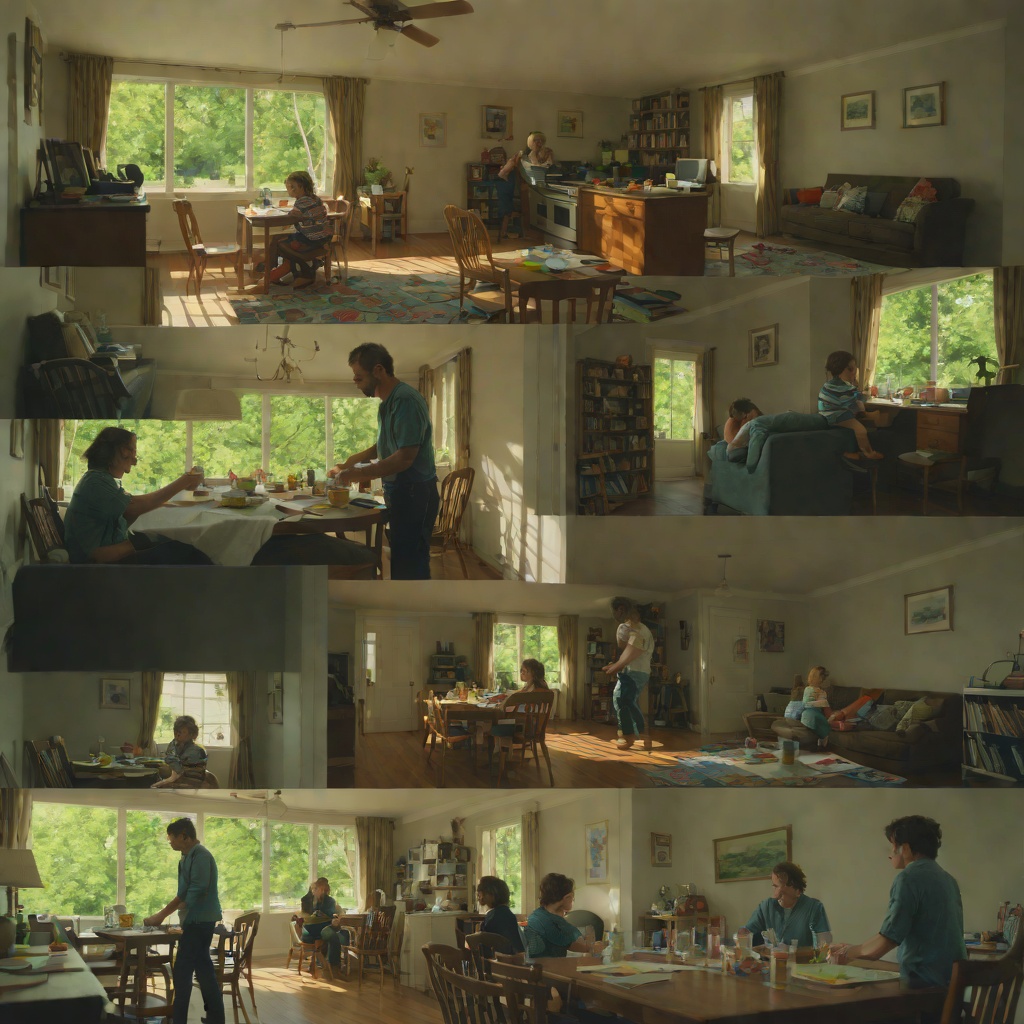
The party is organized according to the visible requirements of a successful family occasion. Banners decorated with little bumper cars hang above a table arranged with miniature plates of finger food; each guest receives a party bag, and The Son is dressed for the occasion. Bright colors and music supply the expected atmosphere, while The Narrator takes pride in having assembled everything correctly. The event therefore begins as an exercise in social legibility: every object and gesture is designed to show that this household can participate in ordinary family life.
The Son’s age makes the celebration especially charged for The Narrator. Although he is now two and is repeatedly described by others as no longer a baby, her mind remains fixed on childbirth, with the memory of pushing and waiting for his tiny head to appear. The birthday does not simply mark his development; it places his growth beside her inability to move beyond the scene of his arrival. The child’s movement through the party—spitting out chocolate-banana cake, running away, being chased, rugby-tackled, kissed, inhaled, and then escaping again—makes him physically vivid and uncontrollable. He cannot remain the motionless emblem of family success that the photographs and decorations attempt to create.
The Party as Performance
When the candles are blown out, The Husband stands behind The Narrator while numerous cameras point toward them. The resulting photograph fixes the couple and child in an image that seems to last forever, but the image is also described as decorated and walled in. The family is preserved by the camera at the precise moment when its apparent unity is most artificial. The photograph thus functions less as proof of happiness than as a sealed enclosure, making the party’s social performance resemble a trap.
The other mothers provide the ceremony with its external approval. They respond favorably while small strands of banana remain caught in their teeth, an image that joins polite communal judgment to exposed, messy bodies. The Narrator drinks the dregs of yesterday’s wine, first in the swing and then from additional bottles, repeatedly drinking to herself and to the party she has managed to organize. Her intoxication is not incidental to the scene: it intensifies the distance between the role of host and the private knowledge that the celebration is founded on something intolerable.
The children continue playing hide-and-seek, tag, and duck, duck, goose, games presented as unchanged and therefore emblematic of ordinary continuity. That continuity is soon contaminated. The party’s ritual language of candles, photographs, approval, and inherited games promises a stable family world, while the buried evidence beneath the garden reveals that the world has already been violently broken.
Bloody’s Grave and the Reversal of the Ceremony
The turning point comes when The Narrator’s gaze falls on a mound of earth in the garden. At first she cannot understand what she is seeing; she looks at it as though it were an image of events millions of years in the past, something viewed from the present after its meaning has been lost. The delay makes recognition itself traumatic. The mound is not an ordinary feature of the garden but the place where Bloody has been put after being shot.
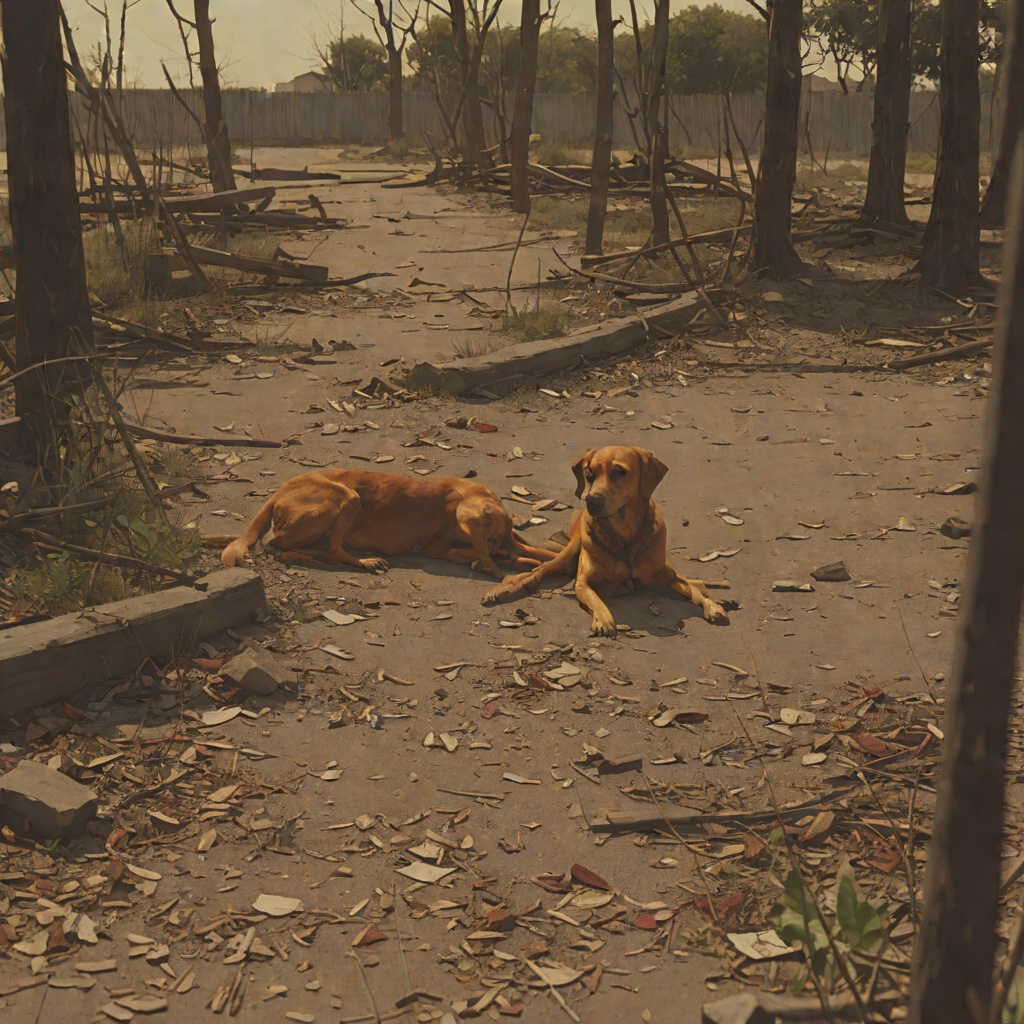
The animal’s condition overturns the party’s clean surfaces. Bloody was left outside throughout the night with a bullet in him, unburied, his eyes filled with flies by noon and his entrails spread around him. He was so dead that he did not even produce a final howl. The remains are not kept at a safe narrative distance; they intrude upon the birthday setting as an obscene material fact. The family celebration and the dog’s corpse occupy the same domestic world, exposing the violence that the party’s decorations were meant to conceal.
At the same moment, The Narrator experiences Bloody as both dead body and returning presence. She feels the dog leap onto her lap and bite her, and later hears what she thinks is barking and snarling outside her bedroom door, as though Bloody were protesting against her role in his death. The scene refuses a stable boundary between memory, hallucination, guilt, and physical reality. Bloody’s grave becomes the party’s hidden center, and the event’s value shifts from communal happiness to death, accusation, and unbearable complicity.
Flight and the Family’s Unmaking
The sound of the gun going off completes the reversal. Children skip over the makeshift grave while singing, laughing, and holding hands, turning the site of death into part of the party’s play space. The Narrator cannot absorb the combination of children’s innocence, rancid wine, banana-smeared mouths, and Bloody’s remains. She rushes indoors, shuts herself in the bedroom, and slams the door.
The Husband comes to the door using a succession of affectionate pet names and asks whether she is all right, but The Narrator refuses to answer. His concern is inseparable from the practical demand that she return to the role of host: guests are leaving, the party must not be ruined, and the party bags still need to be found. Her silence therefore becomes a refusal of the social script rather than a moment of reconciliation. When she finally responds, she tells him to leave her alone and die, directing the command toward the marriage as much as toward the man.
The exit is abrupt and dangerous. The Narrator crosses the dining room while guests search for coats, children cry because they do not want to leave, and the adults engage in farewell touching. She gets into the convertible and accelerates without knowing whether she has selected first or third gear. The Husband calls after her that she is crazy, has no license, and asks where she is going. Her driving is not a planned escape but an impulsive break from the household’s enforced order.
Her most consequential gesture is to present The Son to The Husband as though he were a wrapped birthday gift. She declares that he is all The Husband’s, that she is handing him over, and that he deserves him more than she does. The language turns motherhood into an object of exchange and converts the birthday present into a bitter transfer of responsibility. The Son, whose birthday supposedly confirms the family’s unity, becomes the token through which The Narrator rejects her place within it.
Consequences and Significance
The neighbors come outside to watch, whispering that The Narrator has lost control again. Their reaction reduces the crisis to a familiar label, turning a scene of violence, grief, and refusal into another episode in the public story of her instability. As she drives away, the landscape continues past gates, sheep, chickens crushed on the tarmac, abandoned windmills, boats sunk in lakes, animal pens, and chimneys emitting black smoke. The world outside the party is not a restorative pastoral space; it extends the scene’s catalogue of damaged animals, broken structures, and polluted domestic surroundings.
The birthday party consequently exposes the failure of the normal family rather than celebrating its success. The child’s growth, the camera’s permanent image, the mothers’ approval, and the conventional games all promise continuity, but the buried dog and the gunshot reveal a household organized around concealment and violence. The event’s grotesque power lies in its collision of ceremonial brightness with bodily disintegration: cake and entrails, party bags and a bullet, children’s songs and a makeshift grave.
As an act of narration, the scene also moves through delayed recognition and repetition. The Narrator first performs the party, then drinks through it, then sees its hidden wound, and finally reenacts separation through flight and the imagined voice of Bloody. The event does not resolve grief or restore order. Instead, it makes the suppressed death impossible to keep outside the family story, while The Narrator’s abandonment of the celebration converts a ritual of belonging into an unmistakable act of rupture.